Definition
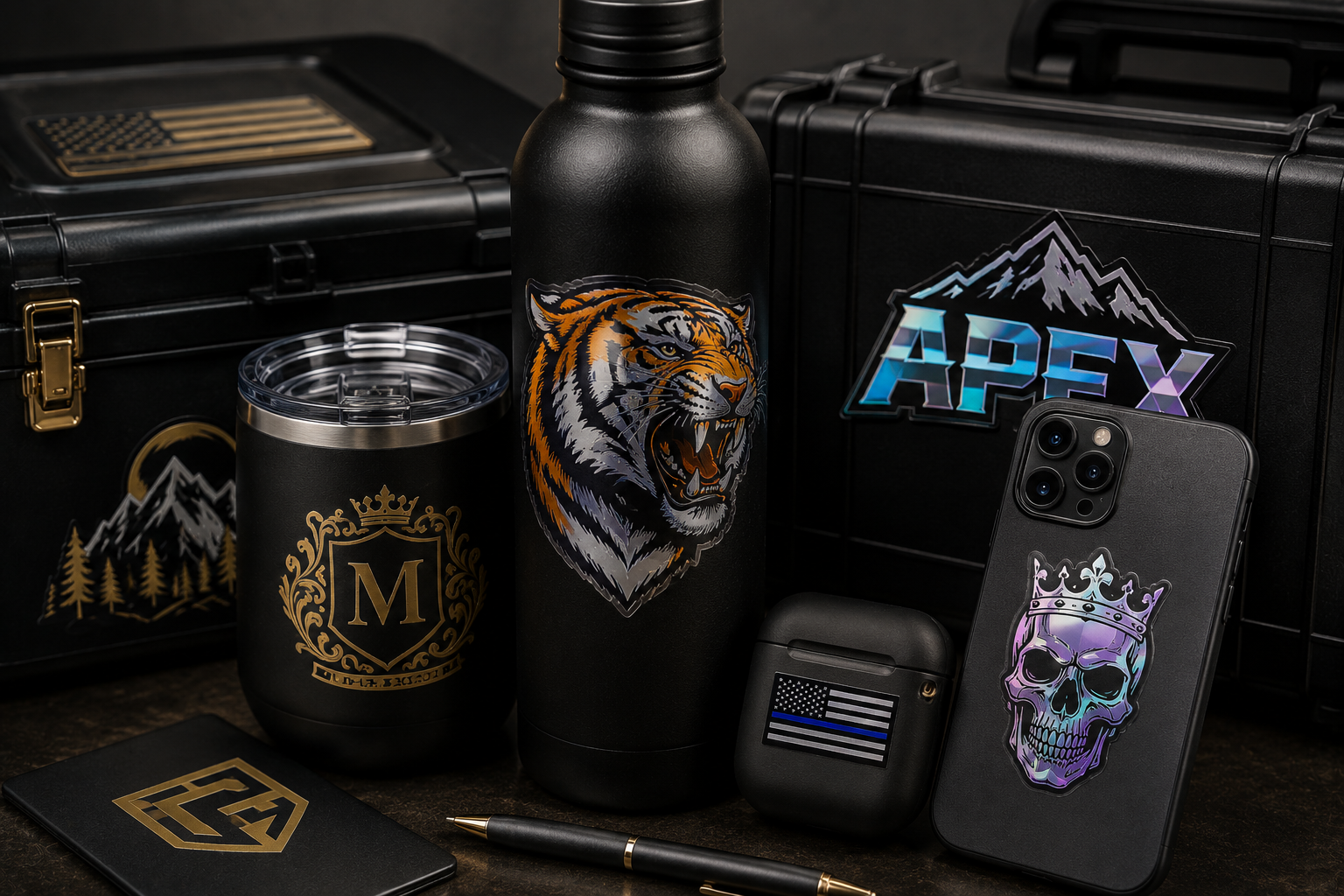
Best Transfers for Hard Goods covers the production-ready decoration methods for rigid non-porous substrates including drinkware, signage, leather, awards, metal, and assembled goods. UV DTF is the workhorse. Dimensional UV graphics and hard-good branding components extend to raised effects. Standard DTF cannot bond because polyamide adhesive needs textile fibers to anchor into.
Hard goods cover any rigid non-porous substrate. Standard DTF cannot bond to these surfaces because its polyamide adhesive needs textile fibers to anchor into. UV-cured products solve this with chemistry built for rigid substrates. This reference covers the right product for each hard-good category.
Why This Matters for Decorators
Decoration shops that only handle apparel turn away the hard-good half of most customer orders. Adding hard-good capability captures the matching drinkware, branded leather goods, and corporate gift packages that follow apparel orders. UV-based transfers extend decoration capability across the full substrate range without major capital investment.
Recommended Transfer Types
- UV DTF Transfers : Peel-and-stick application on any rigid surface. Top choice for drinkware, glassware, and most hard goods.
- Dimensional UV Graphics : Raised tactile branding. Best for premium drinkware, leather panels, and tactile signage.
- Hard-Good Branding Components : One-piece applied tags and logos for assembled products.
- Luxury Branding Transfers : Premium metallic and dimensional accents.
- Leatherette Patches : Laser-cut leather-look patches for journals and rigid panels.
Substrate Compatibility
- Tumblers (stainless, glass, ceramic): UV DTF or dimensional UV graphics.
- Glassware (pint glasses, bottles, vessels): UV DTF.
- Metal awards and plaques: UV DTF or dimensional UV graphics.
- Leather and leatherette journals: Dimensional UV graphics or leatherette patches.
- Sealed wood (cutting boards, signage): UV DTF after sealing.
- Acrylic signage and displays: UV DTF.
- Assembled hardware (bags, briefcases, packaging): Hard-good branding components.
Production Workflow
UV DTF on hard goods is a cold-application process. Clean the substrate with isopropyl alcohol, allow to dry, peel the release sheet, position the print, apply firm pressure across the full transfer area with a roller, and peel the A film away at a sharp angle. Allow 24 hours for full cure before any wash or dishwasher exposure.
Dimensional UV graphics ship pre-cured at full height. They apply with a heat-assisted press at 180 to 200 F for 10 seconds on porous substrates like leather, or cold pressure on rigid non-porous surfaces. The dimensional structure does not deform during application because the UV polymer is fully cured before it leaves the production line.
Pricing Considerations
Hard-good decoration prices per square inch. A typical 4 by 3 inch dimensional UV graphic for a leather journal runs roughly $4 to $7 wholesale. A full tumbler wrap at 6 by 9 inches in UV DTF costs roughly $3 to $5 wholesale. Retail markup of 3x to 4x yields strong margin on decorated hard-good packages, especially for corporate gifting where the perceived value is high.
Getting Started
Order the Specialty Specimen Kit to see UV DTF, dimensional UV graphics, branding components, and leatherette patches in person. Then run a test order on your most common hard-good substrate to validate the workflow before committing to production volume.
Related Reference
- UV DTF for Promotional Products, Promo-specific reference.
- What Is UV DTF, Construction reference.
- Substrate Compatibility, Full matrix.