Definition
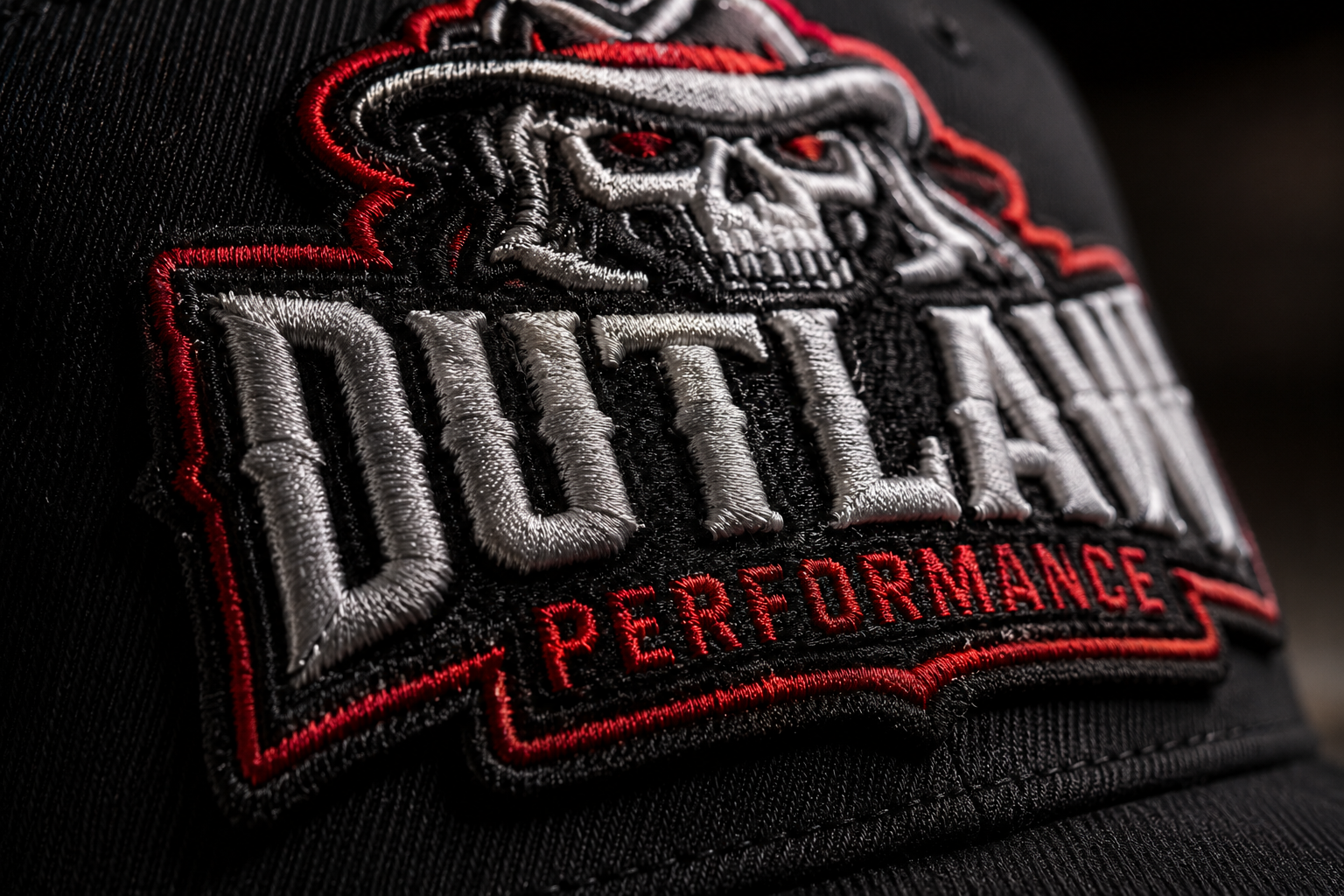
Fauxbroidery is a UV-cured dimensional transfer that replicates the raised stitch texture and visual appearance of embroidery using layered UV ink instead of thread. The process requires no digitizing, no embroidery machine, and no minimum order. Long Island DTF Printing produces fauxbroidery transfers at flat per-square-inch wholesale pricing with 24- hour turnaround.
Fauxbroidery solves a structural problem in the decoration industry. Embroidery is the gold standard for premium apparel decoration, but the production model carries high fixed costs per design: digitizing fees, thread color limits, machine setup time, and minimum quantities that make small runs uneconomical. Fauxbroidery delivers the same visual and tactile outcome at the unit economics of a transfer.
How Fauxbroidery Is Produced
The process runs on a UV LED cure press. The print head jets UV-curable acrylate ink onto a transfer film in multiple cure passes. Each pass deposits a layer of ink that cures instantly under the LED array, building tactile height layer by layer. The final cure pass applies a stitch-pattern texture overlay that mimics the surface relief of satin-stitch embroidery.
The finished transfer reaches 0.5mm to 0.8mm of tactile height and ships as a heat-press-ready film with polyamide adhesive backing. Application is identical to standard DTF: place face-down on the garment, press at 290 to 310 F for 15 seconds with firm pressure, peel warm, optional second press for improved hand feel.
How Fauxbroidery Compares to Real Embroidery
Where Fauxbroidery Works
Fauxbroidery is engineered as an apparel-grade transfer. The UV polymer flexes within the dimensional load of normal garment wear and survives industrial wash cycles when applied correctly.
Works Well
- Cotton t-shirts and polos
- Cotton-poly blends
- Fleece and french terry
- Structured headwear (caps, dad hats)
- Twill jackets and chore coats
- Tote bags and canvas goods
- Performance polyester (at lower press temp)
Test First or Avoid
- High-stretch performance fabric over a flex point
- Waterproof rain gear with silicone coating
- True nylon ripstop
- Pile fabrics over 1/4 inch nap
- Heavily fluoropolymer-treated surfaces
When to Choose Fauxbroidery
The decision between fauxbroidery and real embroidery reduces to three variables: design complexity, run size, and turnaround.
- Choose fauxbroidery for full-color logos, gradient artwork, photographic detail, fine type below 8 pt, runs under 50 units, and any project with a sub-week turnaround requirement.
- Choose real embroidery for high-volume corporate uniform programs above 200 pieces where digitizing amortizes, or for designs with extreme dimensional requirements that exceed UV cure height.
How to Order Fauxbroidery at LIDTF
Long Island DTF Printing prices fauxbroidery at $0.55 per square inch with no order minimum. Send a print-ready file (PNG, PDF, AI, EPS, or SVG) at 300 DPI in sRGB. No digitizing step. No thread file. The system auto-extracts the patch silhouette from the alpha channel of transparent uploads. Standard turnaround is 24 to 48 hours from order placement.
Related Reference
- Order Fauxbroidery Transfers : Live pricing, upload your design, see square-inch cost.
- Raised Dimension Explained : Layered UV cure that builds tactile height.
- What Are Raised UV Patches : Sister product, same UV chemistry, applique format.
- Specialty UV Catalog : Full lineup of UV-cured decoration products.