Definition
DTF (direct-to-film) transfers are full-color heat-applied graphics produced on PET carrier film with hot melt polyamide adhesive. They bond to cotton, polyester, blends, and most fabric types in a single press cycle without screens, weeding, or garment pretreatment. Long Island DTF Printing produces DTF transfers at $0.06 per square inch flat rate with no minimums and 24-hour turnaround.
DTF stands for direct-to-film. It is the dominant general-purpose transfer technology in the decoration industry as of 2026. The process is fabric-agnostic, requires no garment pretreatment, renders full CMYK photographic detail with a built-in white underbase, and ships at a flat per-square-inch wholesale rate with no minimum order. It has effectively replaced screen-printed transfers, plastisol heat transfers, and most heat transfer vinyl in shops that handle short-run, mixed-color, or full-color decoration work.
How DTF Transfers Are Constructed
A finished DTF transfer is four physical layers stacked on a PET carrier film. From the bottom of the stack to the top:
- PET carrier film. A coated polyester film that holds the print until heat application. Peeled away after the press.
- CMYK pigment. The color side of the design printed directly onto the coated film face.
- White underbase. A generated white channel jetted over the color pass. Allows full-opacity color on any garment shade.
- Polyamide adhesive powder. Hot melt adhesive dusted onto the wet white ink, then low-temperature cured to gel onto the stack.
The finished transfer is flexible, dry to the touch, and ready to press or stockpile. Properly stored DTF transfers hold for 12-plus months in a cool, dry environment with no degradation.
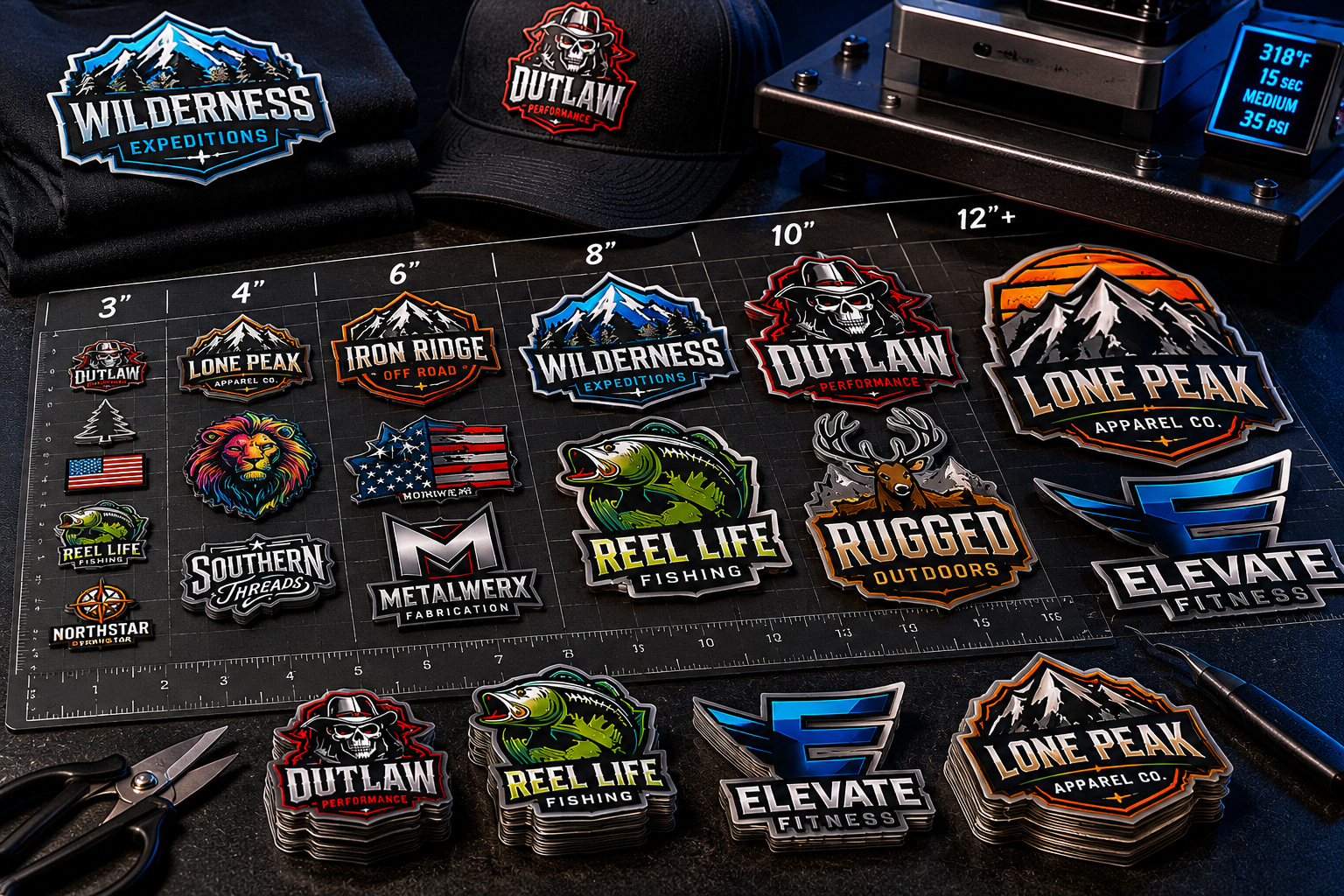
How DTF Transfers Are Applied
The decorator places the cut transfer face-down on the garment with the print and powder side touching the fabric and the PET film facing up. A heat press then drives the standard application cycle.
Standard DTF Press Window
- Temperature: 300 to 325 degrees F for cotton and cotton blends. 285 to 300 F for polyester.
- Time: 10 to 15 seconds.
- Pressure: Medium to firm. Light on heavy fleece to avoid fiber crushing.
- Peel: Warm peel for standard DTF. Cold peel for performance polyester to prevent dye migration.
- Second press: Optional 5-second re-press through a Teflon sheet to lock the bond and improve hand feel.
Heat from the press melts the polyamide adhesive back into a molten state. Pressure drives the molten adhesive plus the pigment stack into the fibers of the garment, where it penetrates the weave. When the bond cools, the polyamide solidifies inside the fabric structure. The print becomes part of the fabric, integrated with the textile rather than a separate layer riding on top of it. The PET film is then peeled away and the print stays behind, bonded into the weave.
What Garments and Substrates DTF Works On
DTF is the most fabric-agnostic transfer technology in current production. The white underbase masks the garment color, so any shade accepts a full-opacity print. The polyamide adhesive bonds to most textile fiber structures.
Works Well
- Cotton (ringspun, open-end, combed)
- 50/50 cotton-poly blends
- Tri-blends (cotton, poly, rayon)
- Performance polyester knits
- Fleece, terry, sherpa
- Canvas duck and denim
- French terry sweatshirts
- Sublimation-printed polyester (with cold peel)
Test First
- True nylon ripstop
- Silicone-treated softshells
- PU-coated rain gear
- Waterproof technical fabrics
- Heavily fluoropolymer-coated surfaces
- Pile fabrics over 1/4 inch nap
DTF vs Other Transfer Methods
DTF differs from screen printing in that it requires no screens, no setup fees, and no minimum quantity. It differs from sublimation in that DTF bonds into cotton, blends, and dark garments, none of which sublimation can reach. It differs from heat transfer vinyl in that it produces full-color photographic detail with no weeding required. It differs from UV DTF in chemistry: standard DTF uses polyamide hot melt that integrates into fabric fibers, UV DTF uses UV-cured acrylate that bonds mechanically to rigid hard goods. See the transfer selection guide for a full decision framework.
Why Decorators Choose DTF
Three structural advantages drive adoption. First, no screens means no per-design setup fee, which makes single-piece and short-run orders economically viable. Second, the white underbase prints automatically, so a single transfer works on white tees, black tees, and every color between. Third, the gang sheet format lets a shop fill a 22-by-118 inch film with dozens of designs at one flat per-square-inch rate, which is the most efficient unit economics in transfer production.
How to Order DTF Transfers Wholesale at LIDTF
Long Island DTF Printing prices standard DTF transfers at $0.06 per square inch with no minimum order. Pricing is calculated on the bounding box of your design. A 10 by 10 inch transfer is $6.00. A 22 by 60 inch gang sheet is $79.20 regardless of how many designs it contains. Standard turnaround is 24 hours from order placement to ship.
- By-size transfers. Upload one design, our system auto-detects dimensions, pay per square inch.
- Gang sheets. Build your own layout in the interactive canvas, or use auto-build to tile a folder of designs automatically.
- File formats. PNG with transparent background preferred. PDF, AI, EPS, SVG accepted. 300 DPI at final print size.
- Pre-cut option. Add $0.29 per transfer to have each one individually cut around the design, ready to press.
Related Reference
- How DTF Works — Full production chain from print engine to heat press.
- Heat Press Guide — Temperature, time, pressure, and peel for every transfer line.
- Substrate Compatibility — What works on what across fabric, leather, and hard goods.
- What Are Gang Sheets — How tiled DTF sheets maximize square-inch efficiency.
- What Is UV DTF — The UV-cured cousin of DTF for glass, metal, and hard goods.
- DTF for Screen Print Shops — How screen printers add DTF for short-run and full-color work.