Definition
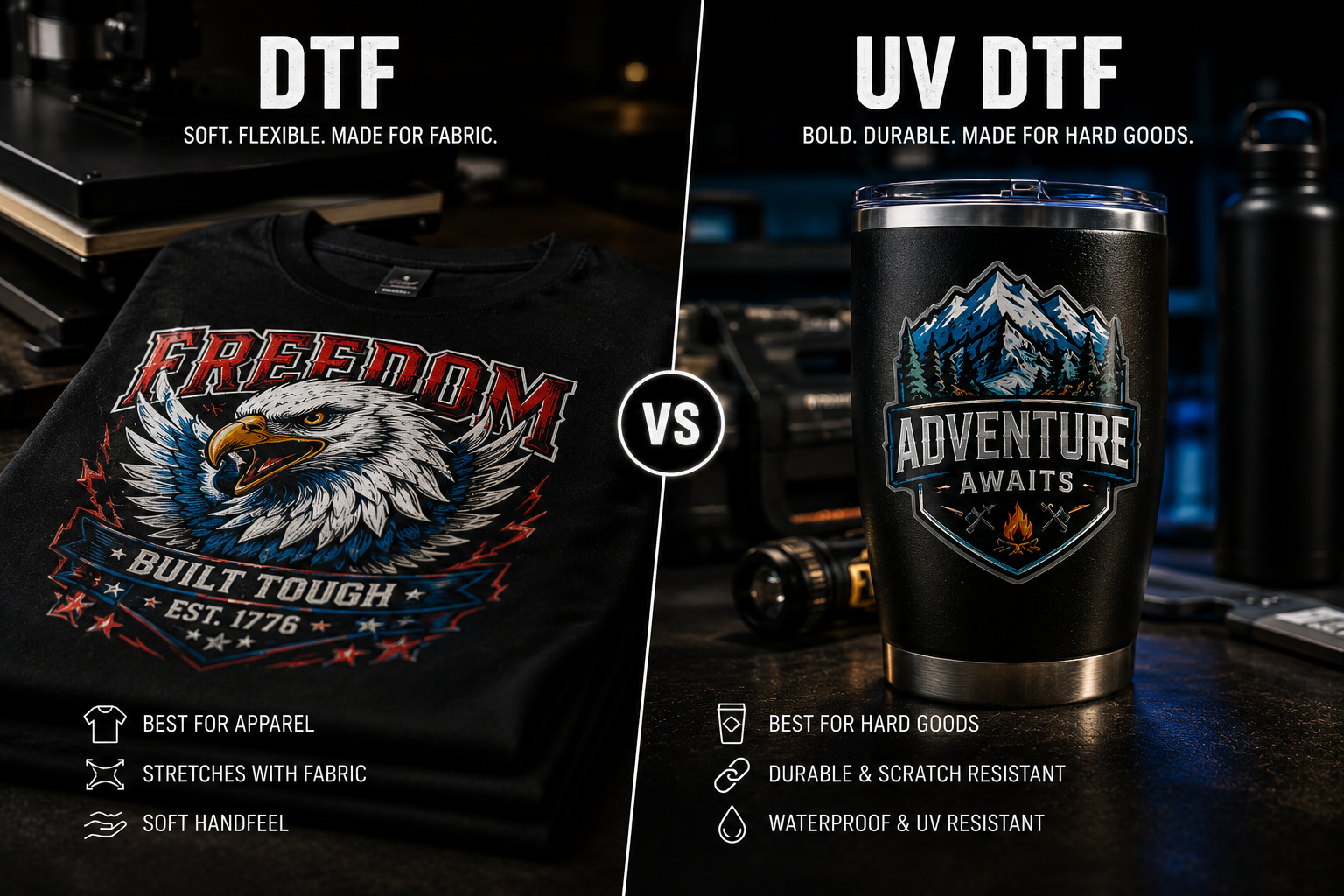
UV DTF vs DTF compares two different transfer chemistries that share a film-based delivery format. UV DTF is a UV-cured acrylate peel-and-stick transfer built for rigid hard goods. Standard DTF is a polyamide hot melt transfer that becomes part of the fabric after a press. Substrate decides the product.
UV DTF and standard DTF share a name and a film-based delivery format, but they are different products built for different substrates. UV DTF is a UV-cured acrylate transfer for rigid hard goods like tumblers, glass, and metal. Standard DTF is a polyamide hot melt transfer for fabric. Choosing between them comes down to the substrate, not the artwork.
At a Glance
| Attribute | Standard DTF | UV DTF |
|---|---|---|
| Ink chemistry | Pigment + polyamide adhesive | UV-cured acrylate |
| Application | Heat press, 300 to 325 F | Peel and stick, no heat |
| Best substrates | Cotton, blends, polyester | Glass, metal, ceramic, plastic |
| Wash / wear | 50+ wash cycles on apparel | Top-rack dishwasher safe |
| Equipment | Commercial heat press required | Hand pressure or roller |
| Pricing | $0.06 per sq in flat | Per-sq-in, 10-unit minimum |
| Turnaround | 24 hours | 24 to 48 hours |
How Standard DTF Works
Standard DTF prints CMYK ink plus a generated white underbase onto coated PET carrier film. Polyamide hot melt adhesive powder is dusted onto the wet ink and cured at low heat to gel the adhesive onto the stack. The finished transfer is shipped as a flexible film, ready to press.
At the heat press, the decorator places the transfer face-down on the garment. The press drives 300 to 325 degrees F for 10 to 15 seconds at medium-to-firm pressure. Heat re-melts the polyamide adhesive and drives it into the fabric fibers, where it penetrates the weave. When the bond cools, the polyamide solidifies inside the fabric structure. The print becomes part of the fabric, integrated with the textile rather than a separate layer on top of it. See the full breakdown in What Are DTF Transfers.
How UV DTF Works
UV DTF prints UV-curable acrylate ink onto a transfer film with a cold-peel adhesive. Wet ink passes under a UV LED array immediately after jetting, where photons crosslink the acrylate polymers into a hard plastic film in milliseconds. The transfer ships as a two-layer film with the printed graphic captured between an A film and a release sheet.
At application time, the decorator peels back the release sheet, presses the printed face against the rigid substrate, applies firm pressure to push out air bubbles, then peels the A film away from the back. The acrylate stays bonded to the substrate. No heat press is required. The transfer is dishwasher safe and waterproof after a 24-hour cure.
When to Use Standard DTF
Use standard DTF whenever the substrate is fabric. Cotton tees, hoodies, performance polyester, fleece, terry, canvas, and denim all accept standard DTF cleanly. The white underbase masks any garment color, so dark and light shirts press from the same transfer. No minimum order, no setup fees, and 24-hour turnaround make standard DTF the workhorse for short-run apparel decoration.
When to Use UV DTF
Use UV DTF for rigid, non-porous hard goods. Tumblers, mugs, water bottles, glass candles, ceramic, metal panels, acrylic signage, leather panels, sealed wood. Promotional product decorators rely on UV DTF for the wide substrate range covered by a typical promo catalog. Boutique brands use UV DTF for branded drinkware drops.
Can You Use Both?
Yes, and most production decorators do. Standard DTF covers all apparel work. UV DTF covers drinkware, signage, hard-good promo products, and any rigid substrate. The two product lines are complementary, not competitive. A typical merch program might pair DTF on the apparel side with UV DTF on the matching tumblers and water bottles. LIDTF runs both in parallel from one shop.
Cost and Turnaround Comparison
Standard DTF prices at $0.06 per square inch flat with no minimum. A 10 by 10 inch transfer is $6.00. UV DTF and the specialty UV product family carry their own per-square-inch rates with a 10-unit production minimum to cover press setup. Standard DTF ships in 24 hours. UV DTF ships in 24 to 48 hours depending on quantity and artwork complexity. Rush options are available on both lines.
Durability Comparison
Both products are highly durable within their target substrate class. Standard DTF survives 50-plus industrial wash cycles on apparel. UV-cured acrylate is fully waterproof and chemically resistant after cure. UV DTF on drinkware is top-rack dishwasher safe. Each product fails when used outside its substrate envelope. Standard DTF does not bond to non-porous surfaces. UV DTF cracks on flexible fabric.
Related Reference
- What Are DTF Transfers, Standard DTF construction and application.
- What Is UV DTF, Full UV DTF reference and substrates.
- Substrate Compatibility, What works on what across all lines.
- Transfer Selection Guide, Decision framework for all transfer types.